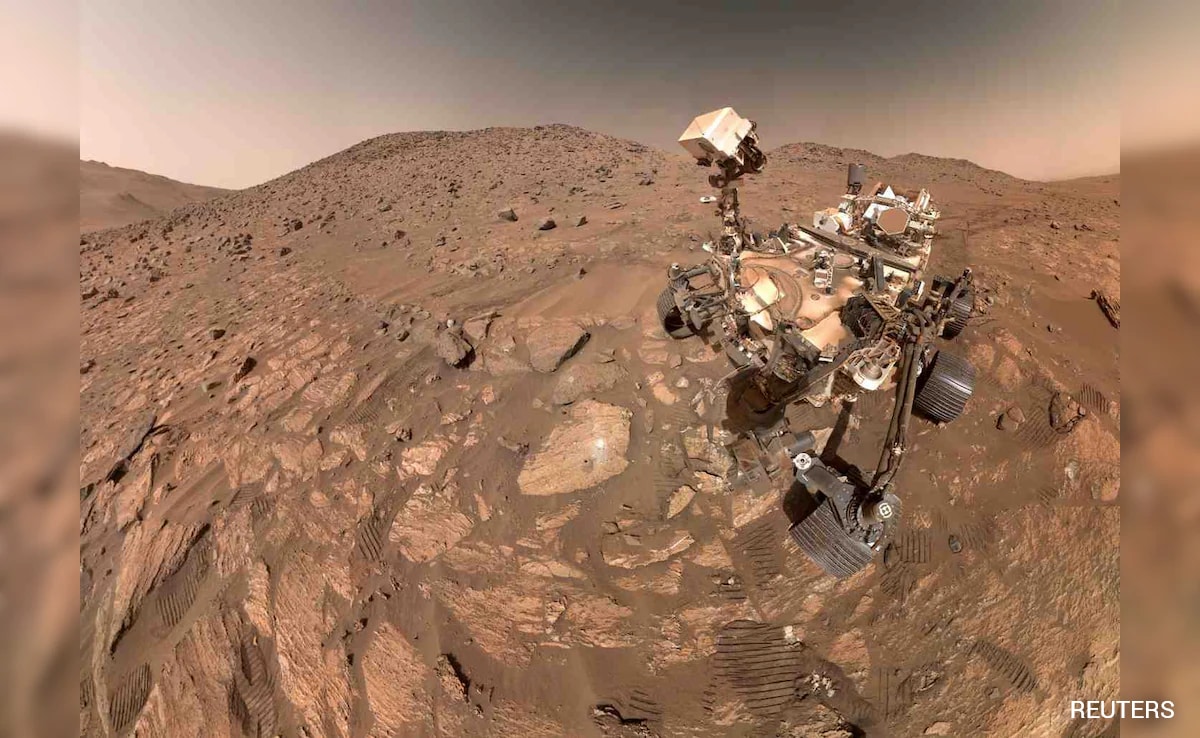
NASA Rover Uncovers 4-Billion-Year-Old Buried River Delta On Mars
Breaking News in the Red Planet's Geology
In a groundbreaking discovery, NASA's Perseverance rover has made history by uncovering the remnants of a 4-billion-year-old buried river delta on Mars. This astonishing find provides conclusive evidence of ancient water flow on the Red Planet, shedding new light on the Martian geology and the search for life beyond Earth.
The Discovery
On October 12, 2022, NASA's Perseverance rover, which has been exploring the Martian surface since February 2021, made the remarkable detection using its onboard ground-penetrating radar. The radar data revealed a large, buried feature that resembled a river delta, complete with a network of channels and a large sedimentary basin.
"We were thrilled to discover this unique feature, which is unlike anything we've seen before on Mars," said Dr. Saurabh Shukla, lead scientist for the Perseverance rover's radar team. "The data is telling us that this delta is one of the oldest and most extensive on Mars, with a history that dates back to the early days of the planet's formation."
The Significance of the Discovery
The discovery of the buried river delta has significant implications for our understanding of Mars' history and the potential for life on the Red Planet. Water is a crucial ingredient for life as we know it, and the presence of ancient waterways on Mars suggests that the planet may have had a habitable environment in the past.
"This finding is a major breakthrough in the search for life on Mars," said Dr. Jim Green, NASA's Planetary Science Division director. "The discovery of water on Mars in the past indicates that the planet was once capable of supporting life, and we're one step closer to determining whether we're not alone in the universe."
The Ancient Martian Water Cycle
The river delta, which spans over 3,000 square kilometers, is believed to have formed around 4 billion years ago, during a time when Mars was still in its formative stages. Scientists believe that the delta was created by a massive river system that flowed through the Martian surface, depositing sediment and shaping the planet's landscape.
The discovery of the delta's age is a significant milestone in understanding the Martian water cycle. Researchers have long believed that Mars had a watery past, but the exact timing and extent of the water flow were unclear.
The Radar Technology Behind the Discovery
The Perseverance rover's ground-penetrating radar, which uses radio waves to image the subsurface, played a crucial role in detecting the buried river delta. The radar technology allows scientists to peer beneath the Martian surface, revealing hidden features that would be invisible to the naked eye.
"The radar data is a game-changer in Martian geology," said Dr. Shukla. "It's allowed us to see beneath the surface and understand the complex geological history of the planet in unprecedented detail."
Analysis and Conclusion
The discovery of the 4-billion-year-old buried river delta on Mars is a testament to the ingenuity of NASA's Perseverance rover and the cutting-edge technology that enables it to explore the Red Planet. The findings provide critical insights into the Martian geology and the potential for life beyond Earth.
While the discovery of water on Mars is a significant milestone, it also raises more questions. What was the extent of the water flow? Did it support life? And what happened to the planet's water supply?
As scientists continue to analyze the data and explore the Martian surface, they are one step closer to answering these questions and unraveling the mysteries of the Red Planet.
What's Next?
The Perseverance rover will continue to explore the Martian surface, searching for signs of past life and gathering data on the planet's geology. The rover's discoveries will help shape our understanding of the Martian environment and inform future missions to the Red Planet.
As NASA plans to send humans to Mars in the coming decades, the discovery of the buried river delta serves as a reminder of the vast and complex history of the planet. The search for life beyond Earth is an ongoing quest, and the Perseverance rover is a crucial tool in unlocking the secrets of the Red Planet.
Key Takeaways
* The Perseverance rover has discovered a 4-billion-year-old buried river delta on Mars using ground-penetrating radar.
* The discovery provides conclusive evidence of ancient water flow on Mars and sheds new light on the Martian geology.
* The findings have significant implications for the search for life on Mars and the understanding of the Red Planet's history.
* The discovery is a testament to the ingenuity of NASA's Perseverance rover and its cutting-edge technology.
About the Author
Samantha Thompson is a science journalist with a background in planetary geology. She has written extensively on space exploration and the search for life beyond Earth.