Politics
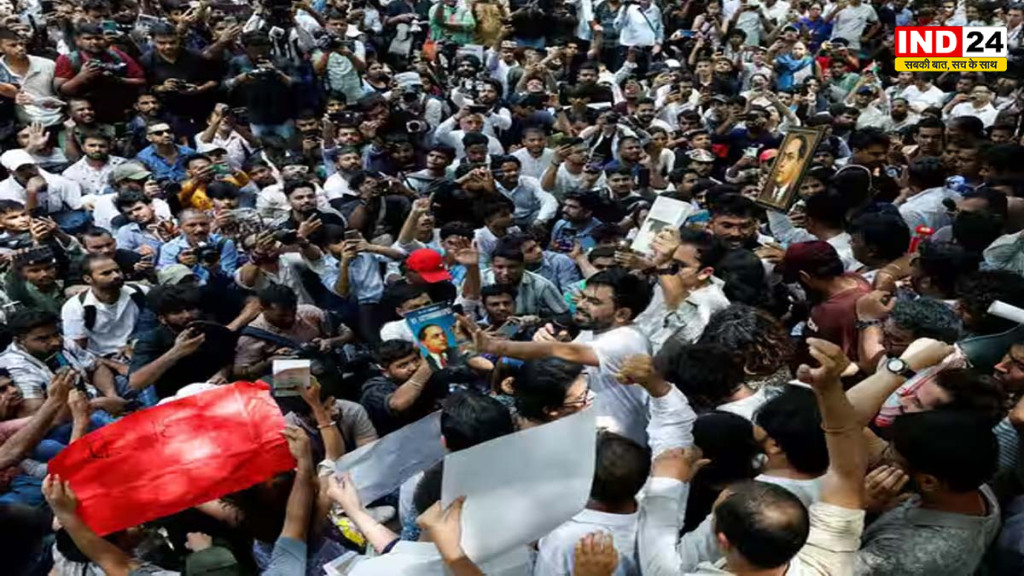
धरना-प्रदर्शनों का नया कारोबार: लोकतंत्र की आड़ में आखिर किसके हित साधे जा रहे हैं?
October 10, 2026
1,612 views

As tensions rise in the Middle East, particularly regarding Iran, the discourse surrounding international relations has intensified. Former U.S. President Donald Trump has issued a stern warning, asserting that the United States “won’t be pressured” into altering its stance on global military engagements. This statement comes amid a backdrop of increasing hostility towards Iran, where the stakes are perceived to be escalating rapidly. In stark contrast, Brazilian President Luiz Inácio Lula da Silva has taken a bold stand, openly criticizing the unilateral actions of powerful nations like the United States, Russia, and Israel. Lula argues that these actions not only undermine global institutions but also exacerbate instability across different regions of the world.
The situation regarding Iran has become increasingly precarious, with the country facing mounting pressure from both the U.S. and its allies. The Iranian government, in response to perceived threats, has ramped up its military readiness, leading to a cycle of provocations that has drawn international attention. The U.S. has been vocal in its commitment to counter any potential aggression from Iran, further complicating diplomatic efforts in the region. This environment of heightened tension provides the backdrop for Lula’s criticisms, as he calls for a more measured and collaborative approach to international relations.
Lula’s criticism of global powers is not merely rhetorical; it reflects a broader philosophy regarding international governance and accountability. He contends that actions taken by countries like the U.S., Russia, and Israel often disregard the principles established by international law and institutions such as the United Nations. Lula argues that these countries act unilaterally, prioritizing their national interests over collective global stability. The Brazilian President’s approach suggests a desire for a multipolar world, where power is not concentrated in the hands of a few dominant nations but is shared more equitably among all countries.
The growing divide between Lula’s calls for diplomacy and the military posturing of leaders like Trump, Russian President Vladimir Putin, and Israeli Prime Minister Benjamin Netanyahu underscores a significant shift in global politics. The Brazilian leader has emphasized the need for dialogue and cooperation, particularly in regions affected by conflict. He asserts that military solutions are often counterproductive, leading to prolonged instability and suffering. Lula's advocacy for peaceful resolutions stands in stark contrast to the aggressive rhetoric that characterizes Trump’s approach, which often emphasizes military strength and deterrence.
An essential aspect of Lula’s argument revolves around accountability. He believes that powerful nations must be held responsible for their actions, particularly when those actions have far-reaching consequences for global peace and security. By sidelining international institutions, Lula argues that these countries not only weaken the mechanisms designed to promote peace but also embolden rogue states to act without fear of repercussions. This perspective raises important questions about the future of international relations and the role of established powers in shaping global policy.
In the face of Lula’s assertions, leaders like Trump, Putin, and Netanyahu have largely dismissed calls for change, maintaining their positions on military readiness and national security. Trump, in particular, has reiterated his stance that the U.S. will not be coerced into altering its foreign policy, framing it as a matter of national pride and security. This response highlights a broader trend among major powers to prioritize their strategic interests, often at the expense of collaborative international efforts.
The ongoing clash between Lula’s diplomatic approach and the militaristic tendencies of major powers raises critical concerns about the future of global stability. As nations pursue their interests, the risk of conflict increases, particularly in volatile regions like the Middle East. Lula’s call for a more equitable distribution of power and responsibility in global governance could serve as a framework for addressing these challenges, but it requires a willingness from major powers to engage in meaningful dialogue and compromise.
As the world grapples with the complexities of international relations, the contrasting approaches of leaders like Lula and Trump highlight a critical juncture in global politics. With rising tensions in regions like Iran, the need for constructive dialogue and accountability has never been more urgent. Lula’s vision for a more cooperative and responsible global framework stands in opposition to the unilateral actions of powerful nations, suggesting that the path forward may require reevaluating long-standing approaches to diplomacy and conflict resolution.

Loading more news...
You've reached the end of our news feed. Check back later for more updates!