
Politics
Pakistan sought truce after heavy losses in Op Sindoor: Ex-Western command chief
October 14, 2026
3,480 views
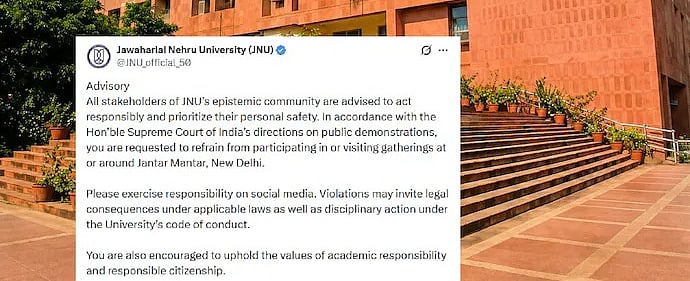
In light of recent developments surrounding protests at Jantar Mantar, Jawaharlal Nehru University (JNU) has issued an advisory to its students and staff. The administration has emphasized the importance of personal safety and urged all members of the university community to act responsibly. This advisory comes as tensions rise in the capital, prompting concerns over the safety of individuals participating in public demonstrations.
The advisory from JNU is set against a backdrop of escalating protests in various parts of India, particularly at Jantar Mantar, a well-known site for demonstrations. As issues related to social justice, political governance, and civil rights come to the forefront, large gatherings can attract both supporters and opposers, creating an unpredictable environment. JNU's administration has taken a proactive stance to ensure that its community remains safe and is not caught in any potential unrest.
In the advisory, the university's administration underscored the need for students and staff to prioritize their personal safety over participating in protests. The message is clear: while the right to protest is a fundamental democratic freedom, personal safety should never be compromised. The university encourages its community members to stay informed and make judicious decisions regarding their participation in public events.
This advisory has far-reaching implications for JNU's vibrant student community, known for its active engagement in socio-political issues. Many students have historically participated in protests, advocating for various causes ranging from educational reforms to human rights. However, the current climate of unrest requires a careful reevaluation of how and when to engage in activism. The university's advisory serves as a reminder that while activism is crucial, it should not come at the expense of individual safety.
Universities like JNU play a pivotal role in shaping the discourse around civic engagement and social activism. They serve as breeding grounds for critical thought and discussion. However, as the line between peaceful protest and potential violence blurs, institutions must navigate this landscape carefully. JNU's cautionary stance reflects a broader trend among educational institutions to prioritize the well-being of their constituents, especially in times of social unrest.
The response from the JNU community to this advisory has been mixed. Some students express appreciation for the administration's concern for their safety, while others feel that it may deter necessary activism. The balance between protecting individuals and fostering a culture of critical engagement is a delicate one. Student leaders are now tasked with finding ways to advocate for their causes without compromising safety.
As JNU navigates this challenging period, the university's advisory serves as a crucial reminder of the responsibility that comes with activism. It calls on students and staff to engage with the world around them in a manner that prioritizes safety and well-being. The dialogue surrounding protests, civic engagement, and personal safety is more relevant than ever, and it is essential for educational institutions to lead by example in promoting responsible activism.


Loading more news...
You've reached the end of our news feed. Check back later for more updates!